





Apresentação

O nosso departamento congrega docente que atuam em diversas áreas de pesquisa, notadamente Ciências dos Materiais, Física Computacional, Astrofísica, Cosmologia e Gravitação, Big Bang, Matéria Escura, Energia Escura, Relatividade Geral e teorias gravitacionais alternativas.. Temos um curso de bacharelado em física com ênfases em ciências dos materiais e física básica e um curso de Licenciatura em Física. Atuamos nos cursos de Pós-graduação em Física de Materiais (FIMAT), Rede Temática em Engenharia de Materiais - REDEMAT, Mestrado Profissional em Estudo de Ciência (MPEC) e outros programas em colaboração com outros departamentos da UFOP. 

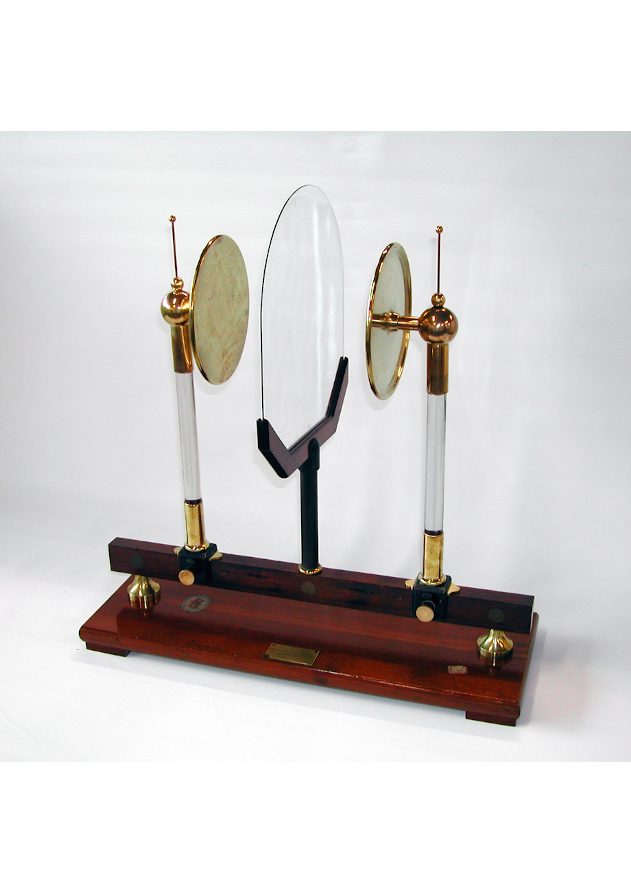
Museu Virtual de Ensino de Física

physicsvirtualmuseum

Horário das Aulas - DEFIS

                 horário

Roteiros de Práticas para FIS105

Roteiros de Práticas para FIS105 – Fundamentos de Física Experimental

Cadernos de Astronomia

cadernos de astronomia


TV-DEFIS

tvdefisyou

PET Fisica - UFOP

PET
monitoria

Publicações Recentes do Departamento de Física

Salla CAM, Teixeira dos Santos J, Farias G, Bortoluzi AJ, Curcio SF, Cazati T, Izsák R, Neese F, de Souza B, Bechtold IH. New Boron(III) Blue Emitters for All-Solution Processed OLEDs: Molecular Design Assisted by Theoretical Modeling. European Journal of Inorganic Chemistry [Internet]. 2019;2019 (17) :2247-2257. Publisher's VersionAbstract
Luminescent boron(III) complexes have recently been employed as emitters in organic light-emitting diodes (OLEDs) with reasonable success. They are easy to prepare and sufficiently stable to be used in such devices, being of great interest as a simple molecular emissive layer. Although emitters for this class with all colors have already been reported, highly efficient and stable blue emitters for applications in solution processed devices still pose a challenge. Here, we report the design, synthesis, and characterization of new boron complexes based on the 2-(benzothiazol-2-yl)phenol ligand (HBT), with different donor and acceptor groups responsible for modulating the emission properties, from blue to red. The molecular design was assisted by calculations using our newly developed formalism, where we demonstrate that the absorption and fluorescence spectra can be successfully predicted, which is a powerful technique to evaluate molecular photophysical properties prior to synthesis. In addition, density functional theory (DFT) enables us to understand the molecular and electronic structure of the molecules in greater detail. The molecules studied here presented fluorescence efficiencies as high as Φ = 0.88 and all solution processed OLEDs were prepared and characterized under an ambient atmosphere, after dispersion in the emitting layer. Surprisingly, even considering these rather simple experimental conditions, the blue emitters displayed superior properties compared to those in the present literature, in particular with respect to the stability of the current efficiency.
Zimdahl W, Velten HES, Algoner WC. Matter Growth in Imperfect Fluid Cosmology. Universe [Internet]. 2019;5 (3). Publisher's VersionAbstract
Extensions of Einstein’s General Relativity (GR) can formally be given a GR structure in which additional geometric degrees of freedom are mapped on an effective energy-momentum tensor. The corresponding effective cosmic medium can then be modeled as an imperfect fluid within GR. The imperfect fluid structure allows us to include, on a phenomenological basis, anisotropic stresses and energy fluxes which are considered as potential signatures for deviations from the cosmological standard Λ -cold-dark-matter ( Λ CDM) model. As an example, we consider the dynamics of a scalar-tensor extension of the standard model, the e Φ Λ CDM model. We constrain the magnitudes of anisotropic pressure and energy flux with the help of redshift-space distortion (RSD) data for the matter growth function f σ 8 .
Dias RF, da Costa CC, Manhabosco TM, de Oliveira AB, Matos MJS, Soares JS, Batista RJC. Ab initio molecular dynamics simulation of methanol and acetonitrile: The effect of van der Waals interactions. Chemical Physics Letters [Internet]. 2019;714 :172 - 177. Publisher's VersionAbstract
We employed PBE and BLYP semi-local functionals and the van der Waals density functional of Dion et al. (2004) (vdW-DF) to investigate structural properties of liquid acetonitrile and methanol. Among those functionals the vdW-DF is the only one that correctly predicts energy minima in inter-molecular interactions between acetonitrile molecules. We found that van der Waals interactions have a negligible effect on H-bonds in methanol chains. However, it significantly increases chain packing resulting in a more dense liquid in comparison to the other two functionals. The overall trend is that the vdW-DF tends to overestimate density and bulk modulus, meanwhile the semi-local functionals tend to underestimate density. Thus, van der Waals interactions play an important role in the properties of liquids in which much stronger dipole-dipole interactions are present.
Souza FS, Matos MJS, Galvão BRL, Arapiraca AFC, da Silva SN, Pinheiro IP. Adsorption of CO2 on biphasic and amorphous calcium phosphates: An experimental and theoretical analysis. Chemical Physics Letters [Internet]. 2019;714 :143 - 148. Publisher's VersionAbstract
Calcium phosphates are suggested as a CO2 adsorbent via pressure swing adsorption. Amorphous calcium phosphate (ACP) and biphasic calcium phosphate (BCP) (composed of hydroxyapatite and beta-tricalcium phosphate) were investigated for the capture/immobilization of the gas. A fluidized bed was set up to assess the levels of CO2 adsorption by ACP and BCP. A gaseous mixture was synthesized, mimicking the conditions for possible industrial use. The results show a significant reduction in CO2 concentrations. Using DFT calculations, we show that CO2 adsorption increases the stability by reducing the surface energy. The energies involved and preferential adsorption sites were also theoretically predicted.
dos Santos PL, Silveira OJ, Huang R, Jardim GAM, Matos MJS, da Silva Júnior EN, Monkman AP, Dias FB, Cury LA. Dynamics of aggregated states resolved by gated fluorescence in films of room temperature phosphorescent emitters. Phys. Chem. Chem. Phys. [Internet]. 2019;21 :3814-3821. Publisher's VersionAbstract
Phenazine derivative molecules were studied using steady state and time resolved fluorescence techniques and demonstrated to lead to strong formation of aggregated species, identified as dimers by time dependent density functional theory calculations. Blended films in a matrix of Zeonex®, produced at different concentrations, showed different contributions of dimer and monomer emissions in a prompt time frame, e.g. less than 50 ns. In contrast, the phosphorescence (e.g. emission from the triplet state) shows no significant effect on dimer formation, although strong dependence of the phosphorescence intensity on concentration is observed, leading to phosphorescence being quenched at higher concentration.
More

Publicações de Livros do Departamento de Física

Mazzoni M, Matos M. Minas, Bahia & Poesia. 1st ed. Belo Horizonte: Clube de Autores; 2025. Publisher's VersionAbstract

Há poemas que falam do que se sente, do tempo e da perda. E há outros que falam do instante — esse breve espaço em que o sentimento e o tempo se tocam e se desfazem. Em Minas, Bahia & Poesia, Mário Mazzoni e Matheus Matos recolhem esses instantes. Suas palavras escorrem pela clepsidra partida, misturando o efêmero e o eterno, a leveza e o peso da existência, a ternura e a ausência dos amores. Cada poema é um fragmento de tempo quebrado — uma pausa entre o que já se foi e o que ainda pulsa, entre o silêncio e o que mantém o poema vivo. Aqui, o cotidiano ganha densidade poética: o gato na janela, as chuvas de março, as serras de Minas e a terra vermelha da Bahia. Tudo vibra, tudo respira — e tudo passa. Só a poesia fica. Mas se o tempo é o carrasco das certezas, é também o espaço onde os poetas reencontram o sentido de existir. Entre espelhos, reflexos e silêncios, Minas, Bahia & Poesia é um livro sobre o que o tempo não apaga: o gesto de sentir.


Sobre os autores: Mário S. C. Mazzoni nasceu em Belo Horizonte, Minas Gerais. É físico e professor da UFMG e do Programa de Pós-Graduação em Física de Materiais da UFOP. Pesquisador na área de Física da Matéria Condensada, publica aqui seu primeiro livro em coautoria. Matheus J. S. Matos nasceu em Aracaju, Sergipe, e cresceu em Irecê -BA, terra que o habita ainda hoje. Físico e professor da UFOP, encontra na poesia um modo de atravessar o tempo e transformá-lo em palavra. Minas, Bahia & Poesia é também o registro dessa travessia.

d s t q q s s


1
 
2
 
3
 
4
 
5
 
6
 
7
 
8
 
9
 
10
 
11
 
12
 
13
 
14
 
15
 
16
 
17
 
18
 
19
 
20
 
21
 
22
 
23
 
24
 
25
 
26
 
27
 
28
 
29
 
30
 
31