








Apresentação

O nosso departamento congrega docente que atuam em diversas áreas de pesquisa, notadamente Ciências dos Materiais, Física Computacional, Astrofísica, Cosmologia e Gravitação, Big Bang, Matéria Escura, Energia Escura, Relatividade Geral e teorias gravitacionais alternativas.. Temos um curso de bacharelado em física com ênfases em ciências dos materiais e física básica e um curso de Licenciatura em Física. Atuamos nos cursos de Pós-graduação em Física de Materiais (FIMAT), Rede Temática em Engenharia de Materiais - REDEMAT, Mestrado Profissional em Estudo de Ciência (MPEC) e outros programas em colaboração com outros departamentos da UFOP. 

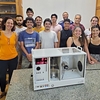
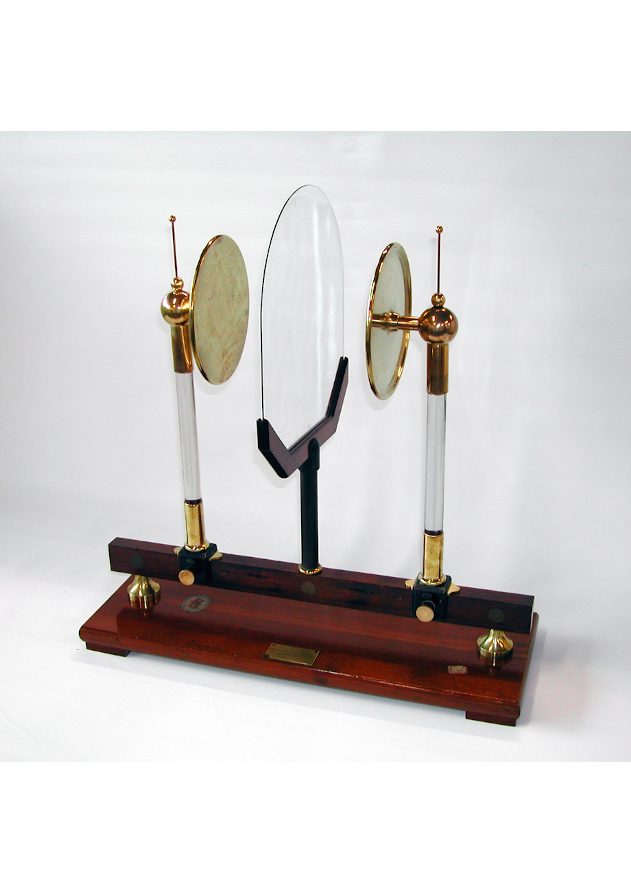
Museu Virtual de Ensino de Física

physicsvirtualmuseum

Horário das Aulas - DEFIS

                 horário

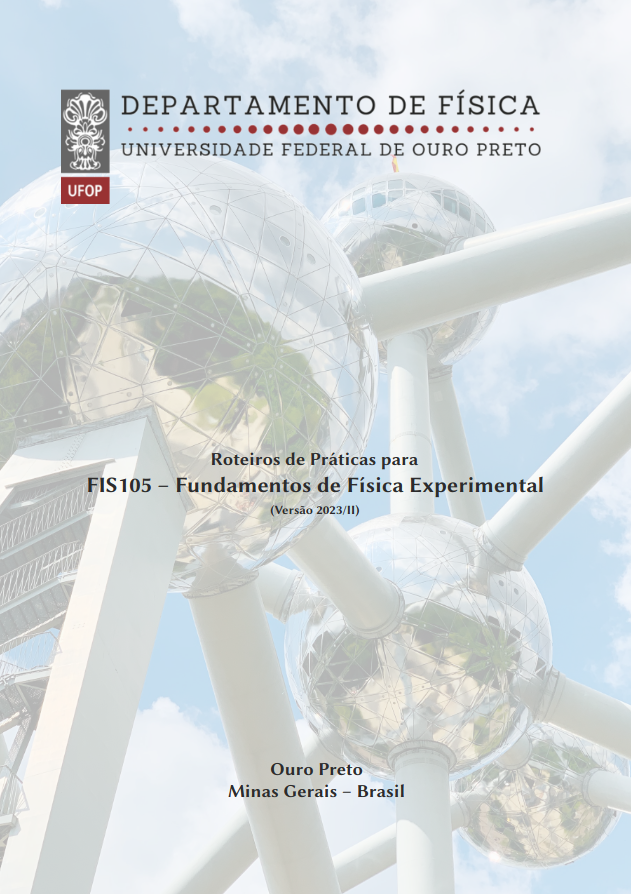
Roteiros de Práticas para FIS105

Roteiros de Práticas para FIS105 – Fundamentos de Física Experimental

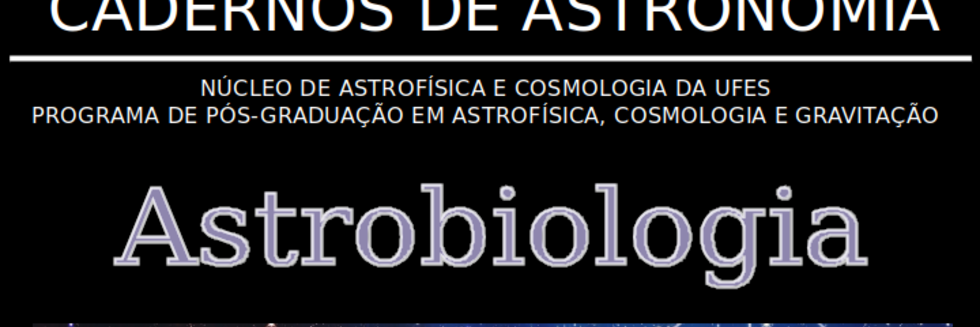
Cadernos de Astronomia

cadernos de astronomia


TV-DEFIS

tvdefisyou

PET Fisica - UFOP

PET
monitoria

Publicações Recentes do Departamento de Física

Frizon TEA, Vieira AA, da Silva FN, Saba S, Farias G, de Souza B, Zapp E, Lôpo MN, de Braga HC, Grillo F, et al. Synthesis of 2,1,3-Benzoxadiazole Derivatives as New Fluorophores—Combined Experimental, Optical, Electro, and Theoretical Study. Frontiers in Chemistry [Internet]. 2020;8 :360. Publisher's VersionAbstract
Herein, we report the synthesis and characterization of fluorophores containing a 2,1,3-benzoxadiazole unit associated with a π-conjugated system (D-π-A-π-D). These new fluorophores in solution exhibited an absorption maximum at around  419 nm (visible region), as expected for electronic transitions of the π-π* type (ε  2.7 × 10⁷ L mol−1 cm−1), and strong solvent-dependent fluorescence emission (ΦFL  0.5) located in the bluish-green region. The Stokes' shift of these compounds is ca. 3,779 cm−1, which was attributed to an intramolecular charge transfer (ICT) state. In CHCl3 solution, the compounds exhibited longer and shorter lifetimes, which was attributed to the emission of monomeric and aggregated molecules, respectively. Density functional theory was used to model the electronic structure of the compounds 9a–d in their excited and ground electronic states. The simulated emission spectra are consistent with the experimental results, with different solvents leading to a shift in the emission peak and the attribution of a π-π* state with the characteristics of a charge transfer excitation. The thermal properties were analyzed by thermogravimetric analysis, and a high maximum degradation rate occurred at around 300°C. Electrochemical studies were also performed in order to determine the band gaps of the molecules. The electrochemical band gaps (2.48–2.70 eV) showed strong correlations with the optical band gaps (2.64–2.67 eV).
Ribeiro SP, Dattilo W, Castro e Silva A, Reis AB, Goes-Neto A, Alcantara L, Giovanetti M, Fernandes GW, Azevedo VA, Coura-vital W. Severe airport sanitarian control could slow down the spreading of COVID-19 pandemics in Brazil. medRxiv [Internet]. 2020. Publisher's VersionAbstract
Background. We investigated a likely scenario of COVID-19 spreading in Brazil through the complex airport network of the country, for the 90 days after the first national occurrence of the disease. After the confirmation of the first imported cases, the lack of a proper airport entrance control resulted in the infection spreading in a manner directly proportional to the amount of flights reaching each city, following first occurrence of the virus coming from abroad. Methodology. We developed a SIR (Susceptible-Infected-Recovered) model divided in a metapopulation structure, where cities with airports were demes connected by the number of flights. Subsequently, we further explored the role of Manaus airport for a rapid entrance of the pandemic into indigenous territories situated in remote places of the Amazon region. Results. The expansion of the SARS-CoV-2 virus between cities was fast, directly proportional to the airport closeness centrality within the Brazilian air transportation network. There was a clear pattern in the expansion of the pandemic, with a stiff exponential expansion of cases for all cities. The more an airport showed closeness centrality, the greater was its vulnerability to SARS-CoV-2. Conclusions. We discussed the weak pandemic control performance of Brazil in comparison with other tropical, developing countries, namely India and Nigeria. Finally, we proposed measures for containing virus spreading taking into consideration the scenario of high poverty.Competing Interest StatementThe authors have declared no competing interest.Funding StatementFunding by CNPqAuthor DeclarationsAll relevant ethical guidelines have been followed; any necessary IRB and/or ethics committee approvals have been obtained and details of the IRB/oversight body are included in the manuscript.YesAll necessary patient/participant consent has been obtained and the appropriate institutional forms have been archived.YesI understand that all clinical trials and any other prospective interventional studies must be registered with an ICMJE-approved registry, such as ClinicalTrials.gov. I confirm that any such study reported in the manuscript has been registered and the trial registration ID is provided (note: if posting a prospective study registered retrospectively, please provide a statement in the trial ID field explaining why the study was not registered in advance).Yes I have followed all appropriate research reporting guidelines and uploaded the relevant EQUATOR Network research reporting checklist(s) and other pertinent material as supplementary files, if applicable.YesI state all data will be available in submission material
Fabris JC, Caramês TRP, Wojnar A, Velten HES. Viscous effects in the dark sector of the Universe. International Journal of Modern Physics A [Internet]. 2020;35 (02n03) :2040041. Publisher's VersionAbstract
Viscous properties are attributed to the dark sector of the Universe. They contribute to the accelerated expansion phase of the Universe and can alleviate existing tensions in the ΛCDM model at small scales. We provide a short review of recent efforts on this topic. Different viscous models for the dark sector are analysed both from theoretical and observational point of view.
More

Publicações de Livros do Departamento de Física

Mazzoni M, Matos M. Minas, Bahia & Poesia. 1st ed. Belo Horizonte: Clube de Autores; 2025. Publisher's VersionAbstract

Há poemas que falam do que se sente, do tempo e da perda. E há outros que falam do instante — esse breve espaço em que o sentimento e o tempo se tocam e se desfazem. Em Minas, Bahia & Poesia, Mário Mazzoni e Matheus Matos recolhem esses instantes. Suas palavras escorrem pela clepsidra partida, misturando o efêmero e o eterno, a leveza e o peso da existência, a ternura e a ausência dos amores. Cada poema é um fragmento de tempo quebrado — uma pausa entre o que já se foi e o que ainda pulsa, entre o silêncio e o que mantém o poema vivo. Aqui, o cotidiano ganha densidade poética: o gato na janela, as chuvas de março, as serras de Minas e a terra vermelha da Bahia. Tudo vibra, tudo respira — e tudo passa. Só a poesia fica. Mas se o tempo é o carrasco das certezas, é também o espaço onde os poetas reencontram o sentido de existir. Entre espelhos, reflexos e silêncios, Minas, Bahia & Poesia é um livro sobre o que o tempo não apaga: o gesto de sentir.


Sobre os autores: Mário S. C. Mazzoni nasceu em Belo Horizonte, Minas Gerais. É físico e professor da UFMG e do Programa de Pós-Graduação em Física de Materiais da UFOP. Pesquisador na área de Física da Matéria Condensada, publica aqui seu primeiro livro em coautoria. Matheus J. S. Matos nasceu em Aracaju, Sergipe, e cresceu em Irecê -BA, terra que o habita ainda hoje. Físico e professor da UFOP, encontra na poesia um modo de atravessar o tempo e transformá-lo em palavra. Minas, Bahia & Poesia é também o registro dessa travessia.

d s t q q s s


1
 
2
 
3
 
4
 
5
 
6
 
7
 
8
 
9
 
10
 
11
 
12
 
13
 
14
 
15
 
16
 
17
 
18
 
19
 
20
 
21
 
22
 
23
 
24
 
25
 
26
 
27
 
28
 
29
 
30